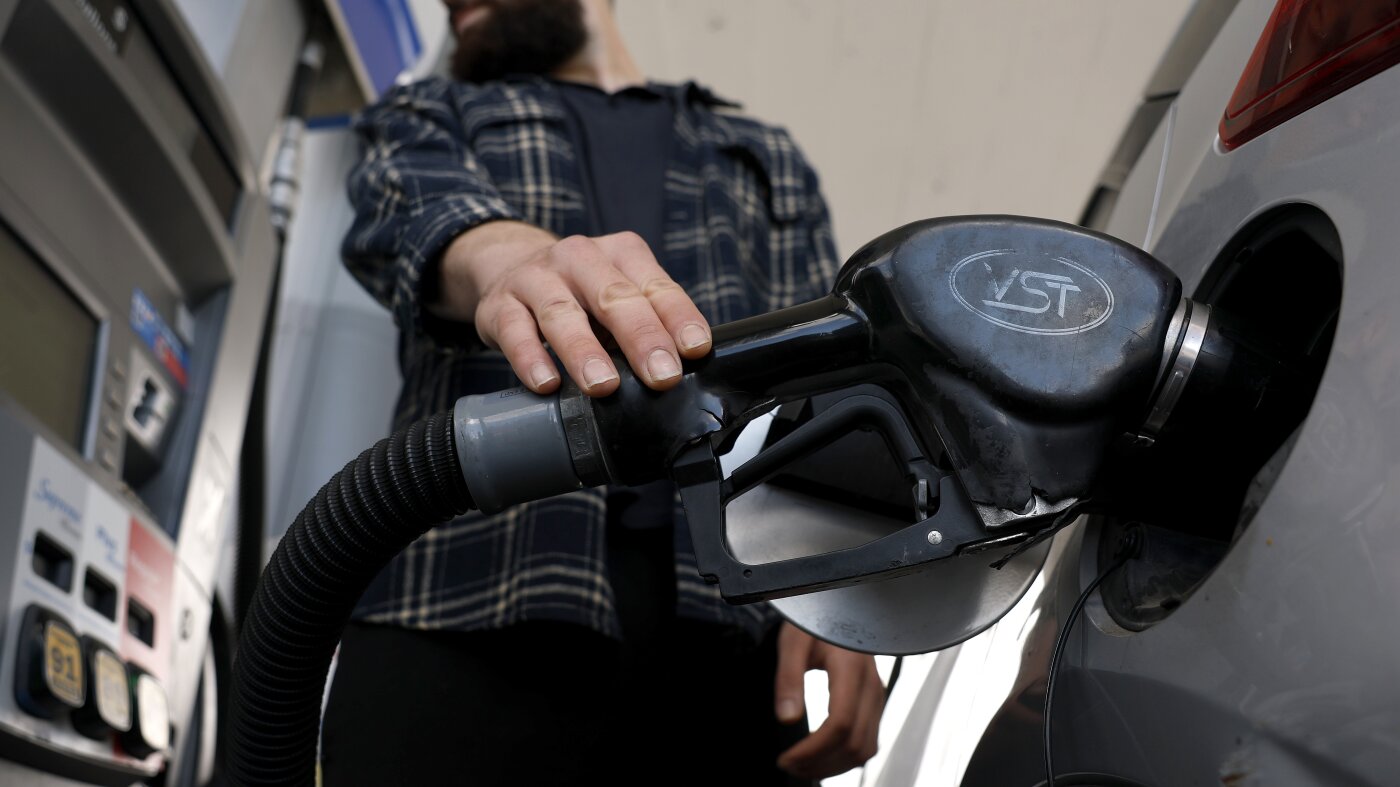
trend indicators Our service focuses on delivering stock research, market commentary, and earnings interpretation to help investors follow key financial events and company performance. As the national average for a gallon of gasoline reaches $4.55 ahead of one of the busiest travel weekends of the year, consumers are exploring options to reduce fuel expenses. Driving slower, switching to electric vehicles, or avoiding driving altogether are among the strategies that may help individuals manage rising costs.
Live News
trend indicators Scenario analysis and stress testing are essential for long-term portfolio resilience. Modeling potential outcomes under extreme market conditions allows professionals to prepare strategies that protect capital while exploiting emerging opportunities. Historical trends provide context for current market conditions. Recognizing patterns helps anticipate possible moves. The latest available data from AAA shows that the national average gasoline price stands at $4.55 per gallon, coinciding with the approach of a major holiday travel period. This price level represents a significant increase compared to previous years, putting pressure on household budgets and travel plans. NPR’s reporting highlights several practical approaches that drivers might consider to cut fuel costs. One of the most straightforward methods is reducing driving speed, as fuel efficiency typically decreases at higher speeds. Additionally, transitioning to electric vehicles (EVs) could offer long-term savings on fuel, though the upfront cost and charging infrastructure remain considerations. Another option is simply not driving at all—using alternative transportation such as public transit, carpooling, or staying local may help avoid high gasoline expenses. The report notes that these strategies are especially relevant given the current price environment and the expected surge in travel demand during the upcoming holiday weekend. While no single solution fits all circumstances, the combination of behavioral changes and vehicle choices could potentially lead to meaningful savings for consumers.
Gas Prices Near $4.55 Average: Consumer Strategies to Manage Fuel Costs This Travel Weekend Professionals emphasize the importance of trend confirmation. A signal is more reliable when supported by volume, momentum indicators, and macroeconomic alignment, reducing the likelihood of acting on transient or false patterns.Real-time monitoring of multiple asset classes allows for proactive adjustments. Experts track equities, bonds, commodities, and currencies in parallel, ensuring that portfolio exposure aligns with evolving market conditions.Gas Prices Near $4.55 Average: Consumer Strategies to Manage Fuel Costs This Travel Weekend Combining global perspectives with local insights provides a more comprehensive understanding. Monitoring developments in multiple regions helps investors anticipate cross-market impacts and potential opportunities.Trading strategies should be dynamic, adapting to evolving market conditions. What works in one market environment may fail in another, so continuous monitoring and adjustment are necessary for sustained success.
Key Highlights
trend indicators Some traders combine sentiment analysis from social media with traditional metrics. While unconventional, this approach can highlight emerging trends before they appear in official data. Data integration across platforms has improved significantly in recent years. This makes it easier to analyze multiple markets simultaneously. Key takeaways from the NPR report and broader market implications include: - Driving behavior and fuel economy: Reducing highway speeds by 5 to 10 miles per hour may improve fuel efficiency by 7% to 14% per gallon, according to estimates from the U.S. Department of Energy. This behavioral adjustment could be one of the most immediate ways to lower fuel consumption. - Electric vehicle adoption as a long-term strategy: While EVs currently represent a small fraction of U.S. vehicle sales, the high gasoline prices may accelerate consumer interest. However, factors such as vehicle availability, charging network expansion, and electricity costs could influence adoption rates. - Reduced travel demand: The option of avoiding trips entirely—through telework or local activities—might lower overall gasoline demand in the short term. If sustained, such shifts could have implications for energy markets and consumer spending patterns. - Broader economic impact: Elevated gasoline prices may reduce discretionary spending in other areas, potentially affecting retail, hospitality, and transportation sectors. Inflation concerns could also be heightened if fuel costs persist. The data underscores that consumer responses to high gas prices are varied and multifaceted, with potential ripple effects across the economy.
Gas Prices Near $4.55 Average: Consumer Strategies to Manage Fuel Costs This Travel Weekend Observing correlations across asset classes can improve hedging strategies. Traders may adjust positions in one market to offset risk in another.Monitoring macroeconomic indicators alongside asset performance is essential. Interest rates, employment data, and GDP growth often influence investor sentiment and sector-specific trends.Gas Prices Near $4.55 Average: Consumer Strategies to Manage Fuel Costs This Travel Weekend Monitoring multiple indices simultaneously helps traders understand relative strength and weakness across markets. This comparative view aids in asset allocation decisions.Access to multiple timeframes improves understanding of market dynamics. Observing intraday trends alongside weekly or monthly patterns helps contextualize movements.
Expert Insights
trend indicators Some traders use futures data to anticipate movements in related markets. This approach helps them stay ahead of broader trends. Continuous learning is vital in financial markets. Investors who adapt to new tools, evolving strategies, and changing global conditions are often more successful than those who rely on static approaches. From a professional perspective, the $4.55 per gallon national average represents a level that historically has prompted changes in consumer behavior and market dynamics. Analysts suggest that sustained high gasoline prices could lead to a modest shift in vehicle purchasing preferences toward more fuel-efficient models, including hybrids and electric vehicles. However, the transition may be gradual due to supply chain constraints and consumer hesitation. For investors, the implications are nuanced. Companies in the energy sector may benefit from elevated oil and gasoline prices in the near term, but prolonged high prices could dampen economic activity and reduce demand over time. Conversely, firms involved in electric vehicle production, battery technology, or public transit infrastructure could see increased interest as consumers seek alternatives. It is important to note that market conditions are subject to a wide range of influences, including geopolitical events, production decisions by major oil-exporting countries, and domestic policy changes. While the current price environment creates opportunities for certain strategies, outcomes remain uncertain. Disclaimer: This analysis is for informational purposes only and does not constitute investment advice.
Gas Prices Near $4.55 Average: Consumer Strategies to Manage Fuel Costs This Travel Weekend Diversifying information sources enhances decision-making accuracy. Professional investors integrate quantitative metrics, macroeconomic reports, sector analyses, and sentiment indicators to develop a comprehensive understanding of market conditions. This multi-source approach reduces reliance on a single perspective.Investors who keep detailed records of past trades often gain an edge over those who do not. Reviewing successes and failures allows them to identify patterns in decision-making, understand what strategies work best under certain conditions, and refine their approach over time.Gas Prices Near $4.55 Average: Consumer Strategies to Manage Fuel Costs This Travel Weekend Data platforms often provide customizable features. This allows users to tailor their experience to their needs.Real-time data also aids in risk management. Investors can set thresholds or stop-loss orders more effectively with timely information.